
EMPIRE STATE BUILDING ARCHITECTURE
About Empire State Building
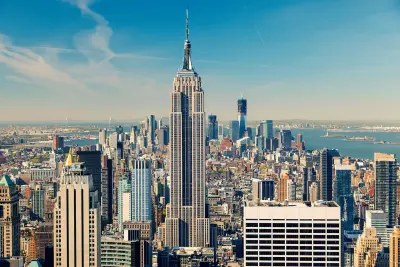
The Empire State Building is an icon of American culture and a 20th-century architectural masterpiece. The American Society of Civil Engineers named this Art Deco skyscraper one of the Seven Wonders of the Modern World. Designed by the architectural firm Shreve, Lamb & Harmon and constructed by Starrett Bros. & Eken, it was completed in 1931 in just over a year. This impressive project was completed with speed and efficiency, even during the Great Depression. It was led by Empire State Inc. on the former Waldorf Astoria Hotel site and driven by key figures such as John Jakob Raskob and Alfred E. Smith, who aimed to create the world’s tallest building.
With its clean lines and symmetrical Art Deco design, the building transformed New York City’s skyline and became a symbol of the city’s ambition and innovation. It held the title of the tallest building in the world until 1970 and remains a timeless symbol of New York’s greatness, making it one of the most photographed buildings in the United States.

Design and its changes
The Empire State Building, an Art Deco masterpiece designed by William F. Lamb, rises to 1,250 feet (381 meters) on its 102nd floor and reaches 1,454 feet (443 meters), including its pinnacle. It was the first building to exceed 100 stories, though only the first 86 floors are usable. The 1st to 85th floors house 2.16 million square feet of office and commercial space, and the 86th floor includes an observatory. The top 16 floors make up the spire, which includes another observatory on the 102nd floor, mechanical areas, and broadcast antennas. Originally planned as a 50-story building, the Empire State Building was raised to 80 stories and 1,000 feet to ensure better views. After the Chrysler Building reached 1,046 feet in 1929, John Jakob Raskob added five floors and a spire, elevating the Empire State Building to 1,250 feet. The 86th floor also features an observation deck at 1,050 feet. The final design underwent 15 revisions, adhering to strict guidelines of a fixed budget, a limestone exterior, strategically placed office spaces near windows, and an ambitious completion deadline of May 1, 1931.
Form and structure
The Empire State Building features a simple, symmetrical design divided into three main parts: a base, a shaft, and a top, resembling a classic column. The five-story base covers the entire lot, with the tower set back 60 feet above the 5th floor. Further setbacks on higher floors allow sunlight penetration into the interiors and reduce street noise. These setbacks resulted from the 1916 Zoning Law, which required that tall buildings allow sunlight to reach the streets below. By placing the largest setback above the base, the tower maintains a uniform shape that makes it stand out from nearby buildings like the smaller and asymmetrical 500 Fifth Avenue. The Empire State Building was constructed using 60,000 tons of steel, 200,000 cubic feet of Indiana limestone and granite, 10 million bricks, and 730 tons of aluminum and stainless steel. It has 6514 windows. Construction progressed rapidly, with the building rising about four and a half stories per week. Its steel frame, which forms a stable 3D grid throughout, was considered a modern masterpiece when it opened in 1931.

Art Deco facade
The Empire State Building’s Art Deco facade is made of Indiana limestone, giving it a distinctive blonde color. The design is characterized by geometric shapes typical of the Art Deco style and focuses on clean, simple lines.
The main entrance on Fifth Avenue features metal doors, with sculpted eagles on each side and a large window adorned with geometric patterns above. Stainless steel canopies mark the entrances on 33rd and 34th Streets and have simpler designs. The first floor is covered in black granite and features aluminum-framed storefronts. The upper floors display rows of windows separated by stone piers and steel details. Aluminum and steel frames around the windows were used to save costs by reducing the need for additional stonework.
Iconic lights
The Empire State Building’s lights have been used to celebrate significant events and holidays. In 1932, white searchlights marked Franklin D. Roosevelt’s election victory. By 1956, they were replaced with “Freedom Lights”. Floodlights were added in 1964 for the World’s Fair but were turned off during the 1973-74 energy crisis. In 1976, red, white, and blue lights were installed for the U.S. Bicentennial. Since 1977, the spire has been illuminated in various colors to mark holidays, sports events, and special occasions. In 2012, the lighting system was upgraded to 1,200 LEDs, which offer 16 million colors and synchronized light shows. The lights are carefully managed and never used for advertising.
Choose one of our best Empire State Building tickets and experience the best views of New York City!

Free cancellation
Empire State Building 86th Floor (Main Deck) Ticket
Enjoy panoramic views of New York City from the main deck of the Empire State Building! Take the elevator, see the Statue of Liberty, Central Park, and six states, and learn from the helpful audio guide and the exhibitions. You can add skip-the-line access and 102nd-floor access for the ultimate experience!

Skip-the-line
Empire State Building 102nd Floor (Top Floor) Ticket
Skip the lines and head straight to the 102nd floor of New York City's most iconic landmark with an express ticket. Take in stunning views of New York City from the observation deck, spotting landmarks like the Statue of Liberty and Central Park. Inside, explore the building’s rich history through interactive exhibits about its construction, Art Deco design, and role in New York’s culture.

Built to last
The Empire State Building weighs 365,000 tons and has an internal volume of 37 million cubic feet. It features 1,172 miles of elevator cables and 2 million feet of electrical wiring. The total floor area is 2.77 million square feet, with each base floor covering 2 acres. The building can accommodate 20,000 tenants and 15,000 visitors daily.
Its steel frame, engineered to endure gravity and wind, provides exceptional strength and stiffness at 42 pounds per square foot.
Essential infrastructure services are centrally located, surrounded by corridors and office spaces from the 6th to the 86th floor, each 28 feet deep. 210 structural columns support each floor. The building uses less stone than similar skyscrapers, allowing for more interior room.
Elegant lobby
The Empire State Building’s main lobby on Fifth Avenue presents an Art Deco design with decorative bronze symbols above the entrance representing Electricity, Masonry, and Heating. The lobby displays a mix of dark and light marble zigzag floor tiles and is lined with dark marble storefronts. An aluminum relief at the west end shows the building with rays from the spire over a New York State map. Nearby, a plaque honors the developers, while a corridor links 33rd Street and 34th Street. The ceiling murals, inspired by the sky and the Machine Age, were restored in 2007 with 23-karat gold detailing. Recent renovations added chandeliers, a decorative anemometer, and panels celebrating the building as the Eighth Wonder of the World. In 2010, a glass star installation restored the lobby’s original grandeur and elegance.

Speed and style
The Empire State Building has 73 elevators, including passenger and service elevators. All are Art Deco and have decorative doors to match the building’s 1930s design. Otis Elevator Company initially installed 64 elevators, including four express elevators for the 80th floor and 60 local ones for other floors. Originally designed to travel at 1,200 feet per minute, their speed was capped at 700 feet per minute by city law, lifted after the building opened. During a $550 million renovation in 2011, the old mechanical elevators were upgraded to automatic systems. A separate elevator runs between the 86th and 102nd-floor observatories, also serving mechanical floors.
Observation decks
The Empire State Building has popular observatories on the 80th, 86th, and 102nd floors. The 86th-floor outdoor deck features stainless steel railings and large glass panels for panoramic views of New York City. The 102nd-floor indoor observatory has floor-to-ceiling windows, maintaining the building’s Art Deco style with modern upgrades for visitor comfort.
Renovations in 2019 improved both decks and introduced new exhibits and an interactive museum on the 80th floor, presenting the building’s history and a skyline mural by Stephen Wiltshire. A new single entrance on 34th Street now leads visitors through a 10,000-square-foot exhibit on the way to the observatories, which often generate more revenue from ticket sales than the building earns from office rentals.

The iconic spire
The Empire State Building’s 158-foot (48 m) mast, located above the 86th floor, was originally designed as a mooring station for airships. It included a waiting room on the 101st floor and a docking station on the 102nd floor. However, strong winds made the plan impractical. The mast has four tiers, topped by a cylindrical shaft and a conical pinnacle. The 102nd floor includes a door leading to the 103rd floor, initially intended for airship passengers but now used for maintenance. This floor also features a circular balcony occasionally open to celebrities or dignitaries. Inside the mast, ladders and stairs provide access to the spire. The mast’s windows were replaced in 2015 to accommodate the building’s broadcast antenna.
Broadcasting from the top
Broadcasting from the Empire State Building began after its completion in 1931, with a small antenna installed to support early radio signals. In 1953, a 200-foot broadcast tower was added to the top of the building, combining functionality with its Art Deco design. The tower allowed multiple broadcasters to share space, significantly boosting its role as a broadcast hub. In the 1970s, signal interference issues caused by the World Trade Center prompted some broadcasters to move, but the Empire State Building remained an important backup. After the September 11 events, it resumed its role as a primary broadcasting site and continued to support broadcasters. Its design has combined elegance with modern technology through all these changes.
Architectural renovations
Over the years, the Empire State Building has been regularly maintained and updated to maintain its classic Art Deco style while adding modern features. The exterior, made of limestone and stainless steel, has been well-maintained and cleaned. Inside, the elevators have been upgraded for faster and safer operation. The lobby has been restored to look like it did in the 1930s, with its original designs and decor. Over 12,000 feet of historic glasswork was replaced, and damaged marble was replaced with new stone to preserve the building’s beauty.
The observation decks have been improved to better handle visitors and offer better views. The building now has energy-efficient windows and a new heating and cooling system, making it more environmentally friendly. These changes help keep the Empire State Building a lasting icon of the New York skyline, combining old charm with new technology.
Discover more of New York with our best-value ticket deals!

Save up to 40%
New York City Pass
Visit 5 top attractions with the New York City Pass! You can climb to the 86th floor of the Empire State Building, visit the American Museum of Natural History or the Guggenheim, take a ferry to the Statue of Liberty, or see the city on a cruise. Your pass is valid for 9 days, so you have enough time to explore the city with no rush.

See more & spend less
Manhattan Walking Tour with Empire State Building
See more than 20 famous locations in New York City, and admire the best views in town from the Empire State Building! An expert local guide will show you the Charging Bull and the Fearless Girl sculptures at the New York Stock Exchange, City Hall, the Brooklyn Bridge, Chinatown, Little Italy, and more. After your small-group tour, you can enjoy views on the 86th and the 102nd floors of the Empire State Building.